As a local business owner in the UK, it’s important your prospective customers are aware of your services and products. While word of mouth is one method, you can increase your visibility through local search engine optimisation (SEO).
Local SEO is about optimising local search results in search engines like Google to make your presence more visible. If done right, it can set you apart from other local competing businesses and big ones.
Local SEO can give you a fighting chance against physical brick-and-mortar businesses and offer many new benefits. It can help you increase your brand visibility and website visits and leads.
Trust us, you can’t afford to miss out on the benefits of local SEO! Today, in this post, dive in, learn about everything you need to know about how it works, its benefits and the best practices for your business.
What is local SEO?
Local SEO is a type of search engine marketing that helps optimise your business profiles for local searches. If your site is found by users looking for local businesses like yours, it’sit’s used for geo-specific searches.
Compared to traditional SEO, which helps improve visibility on a national or global scale, local SEO helps attract people in the vicinity. When someone searches for “”Plumbing services in Norwich,”” the search engine will provide results that are close to that specific location.
However, ranking for your industry in your location does not happen naturally. You need to use Local SEO. Local SEO involves specific strategies and techniques, such as optimising your website, creating and managing listings, and supporting customer reviews.
Why local SEO is important for small businesses
If you’re a small business, local SEO can help you build stronger relationships with your customers, helping them choose you over big competitors. It can also increase your chances of your NAP appearing in local search engines, maps, and directories.
The more visible you appear in these areas, the more active your small business is in the local landscape, and the more it can drive trust and look credible. This increased visibility can integrate you more into your local community, making you look like a go-to and reliable brand for your customers.
In other words, local SEO can:
- Generate additional leads and sales
- Help you rank higher in local search terms
- Make it easier for searchers to find you locally
- Increase trust and credibility in reviews
Best local SEO practices
If you’re curious about how to do local SEO, here are some best practices to follow, which can help improve your visibility in search engines:
Optimise your Google Business Profile
One free directory listing you cannot miss out on is your Google Business Profile. Optimising this can help Google understand your business and allow you to appear in relevant search terms. It can help you appear in Google’s local pack showing your name, address, phone number and ratings.
In addition to this, verify your location, keep your opening hours up to date, and actively manage reviews on your Google business profile. Add photos, videos, and an in-store listing to deepen their understanding whenever possible.
Citations
Again, coming back to NAP (Name, address, and phone number), you need to make sure it’s consistent on every platform. Whether on social media, directories, or websites, all of them must be identical. Different numbers or addresses can decrease trust from the search engine and users.
Local link Building
Another strategy that may help increase your visibility online, locally, is link building. Acquiring backlinks from websites relevant to your location, such as local news publications, blogs, directories, community organisations, and local influencers, can improve your ranking.
Keyword research for local SEO
Another way to optimise your online presence (locally) is to do keyword research. By using relevant local keywords, you can help the search engine understand the geographical importance of your content, improving its ranking. This can also help increase your chances of attracting local customers who are searching for specific search terms.
To do this, start by brainstorming general keywords related to your business and then add keywords that represent what your business offers. Then add local modifiers to them, i.e “Plumbing services in Cornwall UK” or “electrician in South Shields.
Local keyword research is crucial to your visibility. To explore it more, check out this post by Ahrefs on local keyword research.
Local SEO audits and performance tracking
Another way to improve your local search engine rankings is through a local SEO audit. This can help provide an examination of your search visibility. Local SEO audits tend to focus on your:
- Google Business Profile
- Usage and relevancy of local keyword research and optimisation
- Citations
- On-page SEO
- Manage Online reviews
- Analysis backlinks (if working)
To conduct a local SEO audit, you’ll want to take a systematic approach and, whenever possible, use specialised tools to identify your strengths, weaknesses, and areas for improvement to attract customers.
Challenges in local SEO
Local SEO is an essential part of your localisation strategy; however, it often gets neglected. A few common mistakes are made in local SEO, which can prevent your visibility.
Inconsistent or duplicate NAP citations
Search engines depend on consistent NAP information to verify your business and location. If your details are different on various platforms, the algorithm can lose trust in the data, lowering your rankings and decreasing the user experience. Moreover, if you have duplicate business listings on directories or social media, this can confuse customers and harm visibility.
Negative Reviews
If you have negative feedback, it can make your business appear lower in local search results. It can often make it difficult for potential customers to find you (Google’s algorithm) values quality and quantity of reviews as a major local ranking factor, and a low average rating can reduce visibility.
Bad mobile experience
Nowadays, users conduct most of their online searches using their mobiles. If your website is slow or not optimised for mobile, it can discourage visitors and impact your rankings.
How to improve local SEO
Local SEO is a long game; there’s always something you can do to improve your ranking. To get you started, here are a few tips:
- Ensure all of your content is readable
- Have consistent NAP across all platforms
- Optimise your website for on-page SEO with a local focus
- Build high-quality local backlinks
- Encourage and manage customer reviews
- Use infographics to showcase customer testimonials visually
- Engage with your local community online and offline
- Use case studies to showcase local SEO success stories.
Wrapping up
Overall, local SEO is essential for any UK business wanting to boost its visibility and effectively compete in local markets. By optimising your online presence in search engines, you can make it easier for your prospective customers to find you and choose you over larger companies.
Local SEO has many benefits, such as increased website traffic, higher lead generation, enhanced trust, positive reviews, and a better brand image. To effectively manage local SEO, always have consistent NAP citations, build high-quality local backlinks, use infographics, conduct targeted keyword research, and regularly audit your performance.
Check how your website is performing
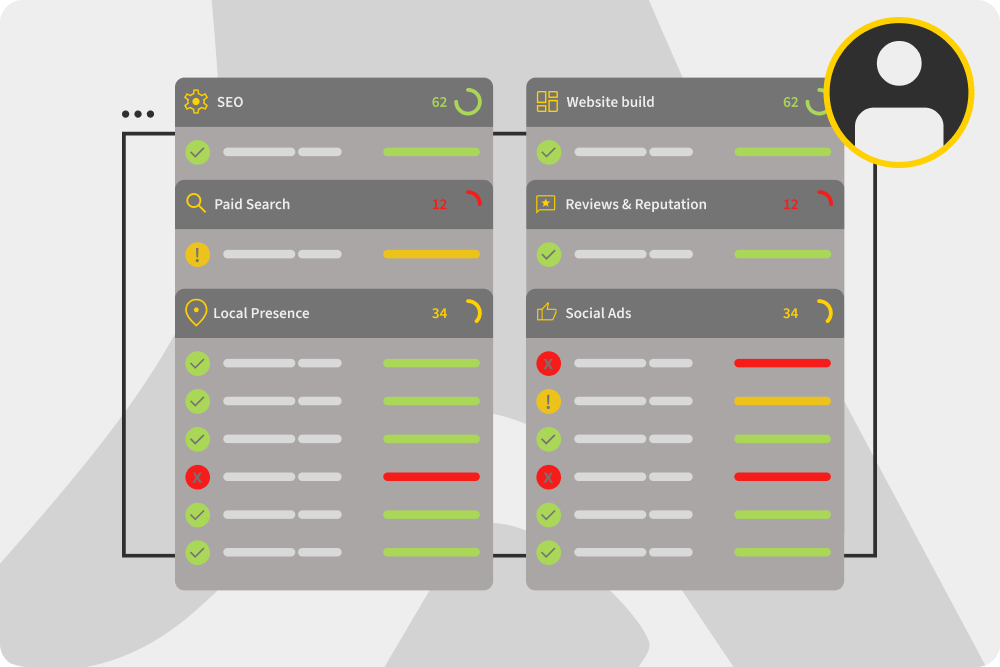
Want to find out how your website is performing? Our free website checker scans your website to check how effective your website is and whether it stands out online. You’ll get your report in less than 60 seconds, along with guidance on how to improve your website and digital presence.
You can also find more tips on SEO for your business in our free Digital Marketing Guide, available to download now. This simple, practical guide helps you get to grips with the basics and get started with marketing your business online