
If you’re an online business, you need more than a good website and social media page word of in this day and age. You need a solid online reputation to stand out from the crowd.
Think about it, when people search for you the first thing they’ll do is go to Google. Which means you need a positive presence on search engines.
And trust us, if you’re a small business, you can’t risk having a bad presence, as it could really be devastating for your online existence.
Don’t put your business at the forefront of these risks. Dive in with us today and learn key techniques for creating and maintaining a good online reputation!
What is online reputation?
Online reputation is the reputation of your business, product, or service on digital platforms. Its impact depends on your interaction with website users and followers on social media networks and directly impacts your credibility and visibility.
You can think of it like a digital footprint, documenting the reactions to your online activities and what others think/post about your business.
Why is online reputation important?
If you’re a digital business, online reputation is critical today. It’s the backbone of your brand image, and if you want to really succeed, it helps to have a strong one. Your online reputation can serve as a foundation for confidence in your target audience, and adding a form of social proof and visibility can help with sales.
Moreover, online reputation can help with:
- Brand credibility
- Nurture existing customer relationships
- Expand reach to new customers
- Improve presence on social media
- Suppress negative content (through reviews, posts and publications)
Online reputation = Increased credibility, trust and overall positive brand image
How to manage online reputation
When it comes to managing your online brand reputation, there’s no one-size-fits-all method. Maintaining a positive online presence requires first understanding your existing reputation and then dealing with feedback accordingly.
Monitoring your brand reputation
First, you’ll need to conduct a brand audit before you can efficiently manage your online reputation. This will help you learn where you stand and see what others say about your business.
So, how do you do that?
Well, you have to first dive into your online reviews. Look for mentions of your brand across channels, social media platforms, review sites, news outlets, blogs and forums. Look for specific keywords linked to your products or services.
Monitor and record what people say so you know what strategies to implement.
Handling/responding to negative feedback
If you happen to come across negative feedback when researching, don’t worry. It’s not the be-all and end-all of your brand.
While it’s normal for us humans to find it difficult to digest bad feedback, there are ways around it, and you can turn it into a positive outcome.
Here are a few tips to turn around negative feedback:
- Keep a close eye: Stay vigilant on all your business platforms.
- Respond quickly: As soon as you see a review, whether positive or negative, respond to it. On average, 63% of consumers expect businesses to respond to their review within 2-3 days of their posting (Bright Local).
- Move to offline: Remove the negative discussion and address it offline to prevent it from escalating.
- Invest in technology: When you can invest in technology to help automate your response process to become more effective.
Remember: When replying to feedback, your goal is to create lasting relationships with your target audience. Being proactive and engaging, even with negative reviews, can prevent negative interactions from propelling into something else.
What are the common reputation management strategies?
Effectively managing your online reputation is a case of trial and error. Different businesses follow various strategies. To get you started, here are a few areas we suggest you focus on:
SEO
Search engine optimisation (SEO) plays a major role in helping customers visit your website. On average, around 68% of online experiences start with a search on a search engine. This means for you to be visible, your website has to be optimised for search engines (SEO).
While it’s highly technical it can help you attract more traffic to your website, promote positive content to appear higher in search results, build trust and online authority. If you improve readability, optimise your webpages, blog posts and social media profiles using on-page SEO techniques can push down negative reviews/misinformation- more on that later.
SEO is evolving constantly with changes to algorithms, and there are different strategies you can implement for your business. To get you started on SEO fundamentals, check out this article by MOZ.
We’ve put together this simple, practical guide to help you get to grips with the basics and get started with marketing your business online.
Reviews
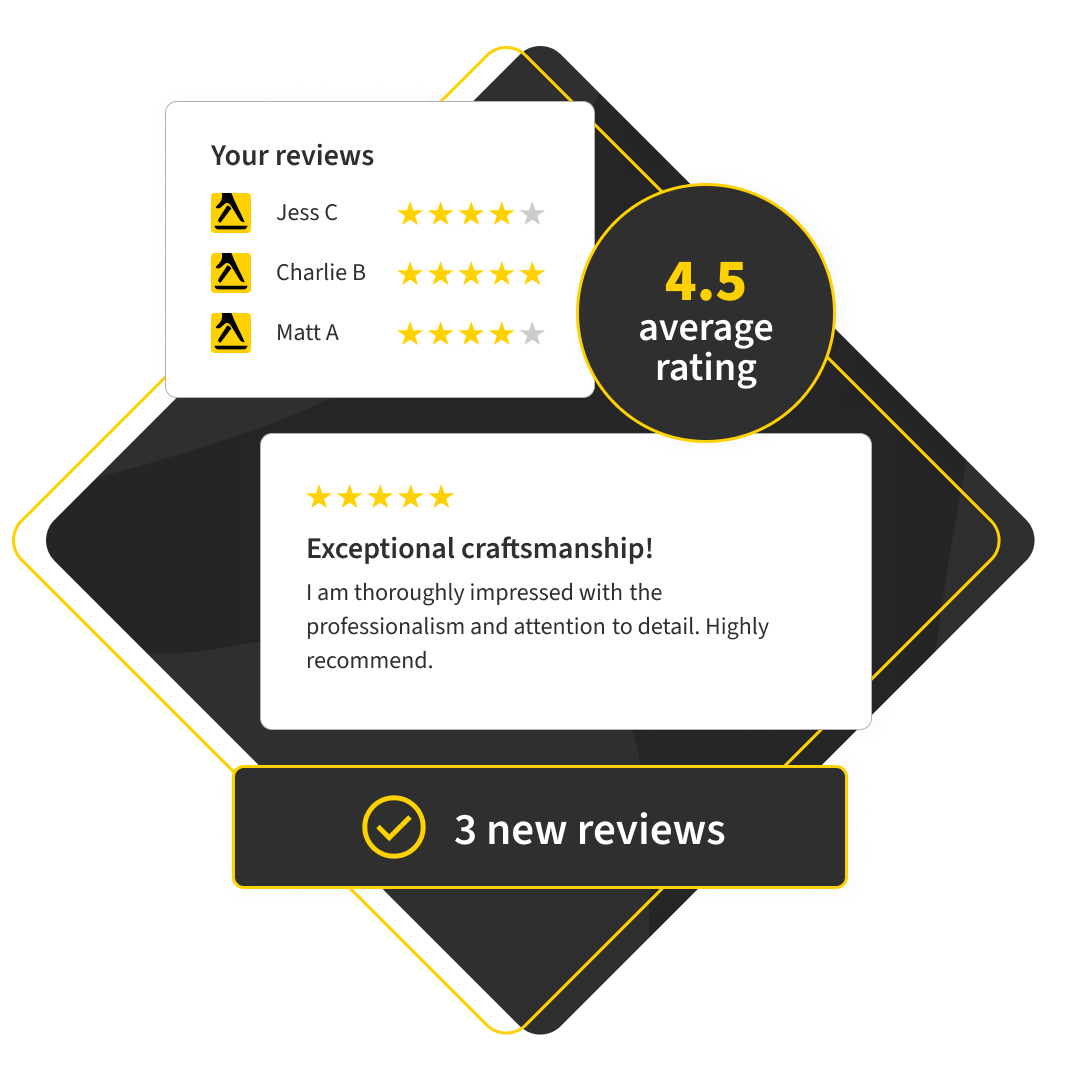
While before we touched upon responding to reviews, let’s highlight why you need to collect reviews. Gaining reviews as a digital business is a MAJOR form of social proof, and can encourage customers to buy. Remember, there’s power in numbers and lots of good reviews can increase the power of your brand and help with SEO, potentially contributing to your search engine ranking.
- Ask customers: Make it a habit to request reviews from your customers immediately after a purchase or online reaction. You’ll get higher-quality, longer, and more detailed reviews.
- Focus on Google: Most search engine traffic will likely find you on Google, so make sure you focus on reviews on your Google Business Profile.
- Go for quantity: More reviews increase your visibility on search engines and boost your overall star ratings on your Google Business Profile.
Effortlessly request, manage, and showcase your reviews with Yell.
Incorporate visuals and data
To increase your credibility online, try adding informatics, reputation statistics, and case studies to your website. In addition to online reviews, these add authenticity and depth to your brand. Data is powerful, and whenever you can, try adding it to your online presence.
Invest in Technology
While managing your online reputation is essential, we get it. It’s not always possible to be on top of it, especially if you need to focus on other areas of your business. To save you time and help you stay on top of reviews, there’s a range of technology that can help notify you.
One of which is Google Alerts. It helps you stay up to date of what people are saying about your business and where they’re saying it. With Google Alerts you get an email notification every time your brand receives a new mention.
There are also paid options like Brand24 and Talkwalker, which provide comprehensive listening across blogs, social media platforms, news, forums, videos, reviews, and podcasts. They send real-time alerts and analysis for your brand.
Online reputation challenges
While it’s essential to be aware of the positives, it’s also important that you’re aware of the negatives. Having an online brand can make you prone to:
- Negative reviews: Can impact your brand image and SEO ranking.
- Fake reviews: Can discourage consumers and damage brand image.
- Brand attacks: A spread of misinformation about your brand, phishing scams and more can damage your credibility.
How to recover from a bad reputation
To limit damage to your reputation, you must have a framework to follow:
Review the damage
Look at your online presence and identify negative content, reviews, and media coverage. Once you’ve found the root cause, you can start taking measures. These could include updating your website, responding to a negative review, providing additional training, or updating your policies and products.
Acknowledge the problem publicity
Take responsibility for the issue and, if necessary, issue a public apology. Be open to others with your business and implement a short-term and long-term reputation recovery strategy whenever possible. In your strategy, you might want to publish more positive content, focus on your SEO efforts to push down negative search results and manage social media profiles.
Respond to negative reviews
Promptly respond to negative reviews and even offer solutions to show your dedication towards resolution and customer satisfaction.
Monitor progress
Once you’ve developed a strategy, review your improvement. Track your mentions, reviews, and search results.
Wrapping up Online Reputation Management
To recap, you must stay on top of your online reputation as a digital business. A good online reputation directly transcends into a positive brand image and a strong authority in your niche. To effectively manage your reputation online, you must reply to reviews quickly, focus on SEO, and add data to enhance your credibility.
Tools like Google Alerts can send you updates about brand mentions and reviews if you’re pushed for time with your business. To prevent damage to your brand, always monitor progress and develop a framework for dealing with negative outcomes.
Online reputation management is not a one-time thing; it’s an area of your digital business that you must continually revisit.